
Managed IT Services
Your Complete IT Department — Without the Overhead
Stop paying for IT the wrong way. Inoconn's managed IT services replace break-fix invoices and disappearing solo consultants with a full team of engineers, a 24/7 NOC, unlimited help desk, and a written SLA — for one predictable monthly price per user.
Detailed Service Overview
Managed IT services are a subscription model in which an outside team — a Managed Service Provider, or MSP — takes ownership of the day-to-day operation of your technology. Instead of paying an hourly consultant only when something breaks, you pay a flat monthly fee per user or per device, and in return the MSP is contractually responsible for keeping your systems patched, monitored, backed up, secured, and available.
Inoconn delivers managed IT to small and mid-size businesses across Las Vegas, Henderson, Summerlin, and the wider Southern Nevada market. Our clients typically have between 10 and 300 employees and either have no internal IT staff, or have a single sysadmin who needs a full team behind them. We handle the entire stack — endpoints, servers, network gear, Microsoft 365, cloud workloads, backups, and identity — and we do it under a documented Service Level Agreement with measurable response and resolution targets.
This service is designed for owners and operations leaders who are tired of three specific patterns: technology decisions being made reactively at the moment something fails, one person quietly holding all the passwords and tribal knowledge, and IT invoices arriving with no relationship to results. Managed IT converts all of that into a predictable line item on your P&L, with the same team accountable for outcomes month after month.
The core business problems we solve are downtime, security exposure, and lack of strategy. Downtime is addressed by proactive monitoring and remediation before end users notice — we resolve the majority of infrastructure events on our side before a ticket is ever opened. Security exposure is addressed by continuous patching, EDR, MFA enforcement, and quarterly review. And strategy is addressed by a named virtual CIO who meets with leadership on a quarterly cadence to align the roadmap with the business plan.
Under the hood we run enterprise-grade tooling: a professional RMM/PSA stack (ConnectWise, Datto, or NinjaOne depending on the environment), SentinelOne or Microsoft Defender for Endpoint on every device, Huntress for managed threat hunting, and a documented runbook for every recurring task. Every configuration, password, and vendor contact is stored in an audited documentation platform that survives staff changes — yours or ours.
Onboarding is a defined 30-to-60-day project, not an open-ended promise. We inventory every asset, install our management agents, remediate the security and hygiene gaps we find, meet your users, and hand back a written report of what was fixed. Only then do we take over day-to-day operations under SLA.
You should evaluate Inoconn if your current situation is any of these: a solo IT contractor with no backup, an internal admin who cannot go on vacation, an MSP that has become unresponsive, or the realization that you need HIPAA / PCI / CMMC posture but have no idea where to start. If one of those describes you, the free IT assessment linked below is the fastest way to see what a real managed IT engagement looks like.
Inoconn Commitment
Every service we deliver is backed by our satisfaction guarantee and decades of combined IT expertise.
How it looks
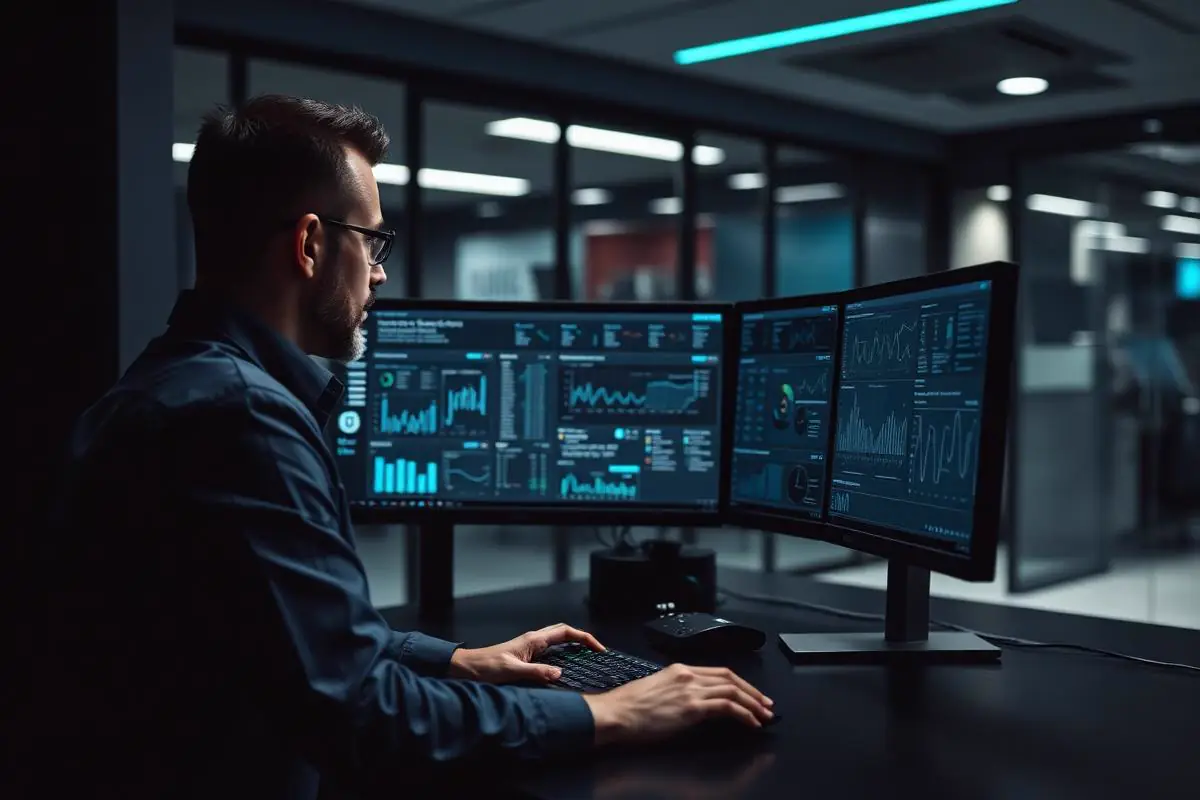
One team accountable for the whole environment
Endpoints, network, identity, and vendor relationships are reviewed together so problems are caught before they interrupt work.
Critical Insight
The True Cost of Reactive IT
Why This Service Matters
Break-fix IT looks cheaper on the invoice and is almost always more expensive in the P&L. When a file server crashes at 8:15 a.m. and 40 employees sit idle for four hours waiting on a consultant, the outage cost is not the consultant's bill — it is 160 person-hours of fully-loaded labor plus whatever revenue was tied to the systems that were down. Industry benchmarks put unplanned downtime at $8,000 to $25,000 per hour for a typical Las Vegas SMB, and most of that number never appears in an IT invoice.
Reactive IT also accumulates hidden security debt. Patches are deferred because 'we don't want to reboot during business hours,' local admin rights are handed out because 'that's faster than opening a ticket,' MFA is skipped because 'the CEO doesn't want the extra step.' Each shortcut is defensible in isolation. Together they produce the environment we most often walk into on incident response calls: a network that was one clicked link away from ransomware for months before it happened.
The third cost is opportunity. Businesses without a technology roadmap don't just spend more when things break — they miss cheaper, better options. Aging on-prem servers get replaced with new on-prem servers because nobody sat down to compare with Azure. Line-of-business software gets renewed at list price because nobody negotiated. Compliance work gets outsourced to an auditor at $400/hour because nobody built the documentation as they went. A managed IT relationship exists specifically to prevent that pattern.
The economics are consistent across our client base: full-service managed IT typically costs 30–50% less than the equivalent internal hire once you include salary, benefits, tools, training, PTO coverage, and the cost of a single person being a single point of failure. And unlike a hire, it scales up and down with headcount without a hiring cycle.
Where it runs
Inside the businesses we support every day
From executive floors to shared workspaces, managed IT keeps the environments people rely on running quietly so the working day is never about waiting on technology.

Where This Fits
Business Environments We Support
Managed IT is a good fit for organizations that rely on stable technology across multiple users, sites, or cloud services and want a documented owner for day-to-day operations.
Professional offices
Firms of 10–150 users with mixed on-premise and cloud workflows.
Medical and dental practices
Practices that need consistent uptime for scheduling, imaging, and practice-management platforms.
Legal offices
Firms with strict document confidentiality and structured file-share needs.
Accounting and financial offices
Environments with seasonal load spikes and sensitive client data handling.
Nonprofits
Organizations balancing donor systems, volunteer access, and grant-funded infrastructure.
Multi-location businesses
Companies operating two or more sites that need consistent policy and support across offices.
Problems → Solutions
Challenges We Eliminate
Constant IT Fires Draining Productivity
Your team loses hours every week to printer jams, VPN drops, Outlook lockouts, and slow laptops. Individually small, in aggregate these micro-outages destroy focus time and quietly cap what your business can deliver.
24/7 Proactive Monitoring and NOC Response
Every server, workstation, firewall, switch, and Microsoft 365 tenant is monitored continuously. Our Network Operations Center receives the alert, applies the runbook, and resolves the majority of events before an end user knows anything happened.
No Strategic IT Planning
Equipment is replaced only when it fails, software is upgraded only under duress, and technology decisions are made in emergencies. Without a written 12–36 month roadmap, IT is always the constraint on growth instead of the enabler.
Unlimited Help Desk (Phone, Email, Portal, Chat)
Your users open tickets the way they prefer — by calling a real engineer, emailing help@, using our self-service portal, or via the Teams app we deploy. All requests are triaged against a written SLA, and nothing is billed per incident.
Rising and Unpredictable IT Costs
Some months the IT bill is $200, others it's $12,000 after an emergency. Budgeting is impossible and every 'unexpected' invoice erodes trust between operations and finance.
Patch and Vulnerability Management
Automated third-party and OS patching on a documented ring schedule (pilot → early → broad). We track KEV (known-exploited-vulnerability) advisories and expedite anything actively being weaponized in the wild.
Security Vulnerabilities Going Unaddressed
Nobody is actively enforcing MFA, retiring old accounts, patching third-party apps, or testing backups. Cyber insurance carriers are increasingly refusing to renew SMBs that cannot demonstrate these basics.
Endpoint Security and MFA Enforcement
Managed SentinelOne or Microsoft Defender for Endpoint, application allow-listing where appropriate, disk encryption, and enforced MFA on Microsoft 365, VPN, and any SaaS that supports it. Cyber insurance-grade controls, deployed correctly.
Key-Person Dependency
All the passwords, vendor contacts, and undocumented workarounds live in one person's head — an internal admin or a solo consultant. When they take PTO, quit, or stop returning calls, operations stop with them.
Strategic Planning via Quarterly Business Reviews
A named virtual CIO delivers a quarterly QBR: what happened, what's aging out, what's at risk, what's on the 12-month roadmap, and what the recommended spend is. Leadership gets a clear picture without needing a technical background.
Slow, Opaque Support
You email support and hope for a response. There is no ticket number, no SLA, no visibility, and no accountability. Managed IT replaces that with a portal, response guarantees, and a monthly report you can hand to your board.
Vendor Management
One call to us replaces calls to your ISP, copier company, line-of-business software vendor, telco, and cloud providers. We hold the accounts, escalate on your behalf, and translate vendor-speak into decisions.
Engagement Model
How a Managed IT Engagement Runs
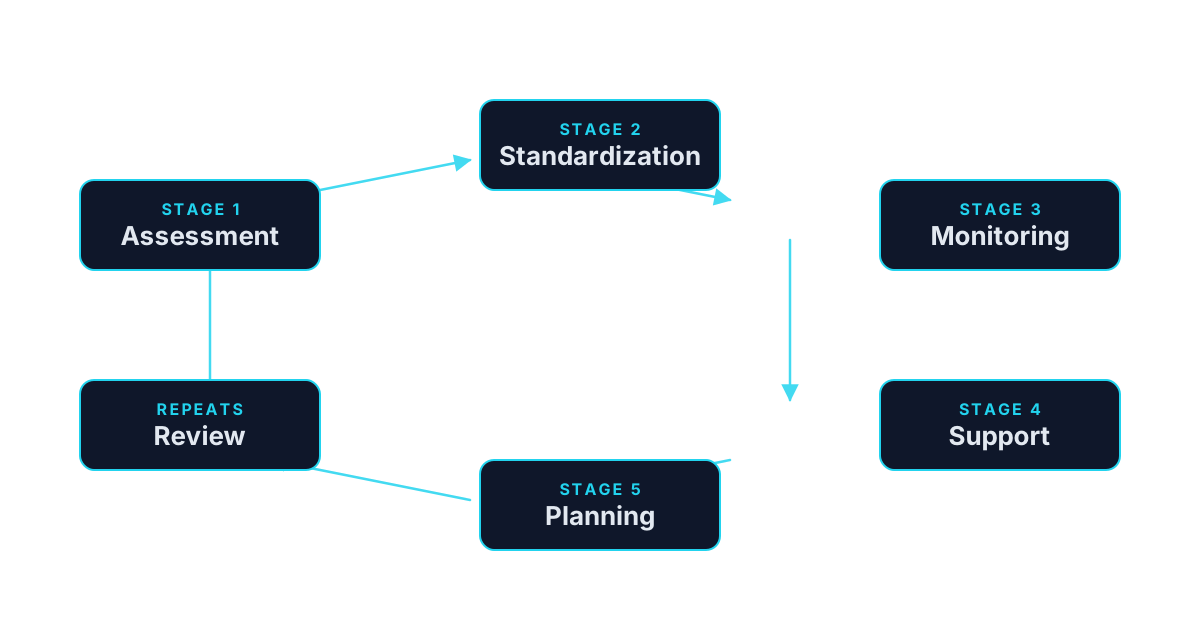
Managed IT begins with a defined transition, not an open-ended promise. Each stage produces documentation the client keeps.
Discovery
Structured conversations with leadership and key staff to understand the business, current pain points, and priorities.
Environment assessment
Inventory of endpoints, servers, network, identity, backup, and Microsoft 365 tenant to establish an accurate starting point.
Transition planning
A written plan covering onboarding sequence, documentation gaps to close, security items to remediate, and communication with existing IT contacts.
Onboarding and remediation
Deployment of management tooling, documentation build-out, and closure of the highest-priority hygiene and security gaps.
Steady-state operations
Ongoing support, monitoring, patching, and vendor coordination under the agreed scope and communication cadence.
Ongoing review
Recurring reviews of tickets, changes, risks, and roadmap items with the account owner.
The work behind it
Hands-on care of the systems in the room
Standard checks, patching, and onsite fixes happen on a rhythm rather than a rescue schedule — the boring routine that keeps small issues from turning into afternoon fire drills.

Platforms We Support
Technology Stack Coverage
Managed IT engagements cover the platforms most Southern Nevada small and mid-size businesses actually run. Scope is confirmed during assessment before anything is taken over.
Microsoft 365
Tenant administration, licensing review, mail flow, and Teams / SharePoint / OneDrive operations.
Windows workstations
Standardized configuration, patching, and monitoring on supported Windows versions.
Windows Server
On-premise and cloud-hosted server administration, patching, and monitoring.
Active Directory
User, group, and policy management for organizations running on-premise directory services.
Microsoft Entra ID
Cloud identity, conditional access review, and MFA configuration for supported tenants.
Business networking
Firewalls, switches, and wireless from vendors we work with regularly.
Backup platforms
Backup design and monitoring for the platforms deployed during the engagement.
The stack we manage
The equipment that keeps day-to-day work moving
Servers, switches, wireless, and endpoints are treated as one connected environment — not a set of unrelated products — so a change in one layer never quietly breaks another.

What's Included
Written SLA With Response and Resolution Targets
15-minute response on P1 (business down), 1-hour on P2, 4-business-hour on P3. Not marketing copy — contractual, measured, and reported monthly.
Dedicated Account Manager and vCIO
The same two humans every quarter. They learn your business, sit in on planning meetings, and are accountable for outcomes.
Live Client Portal
Every ticket, every asset, every warranty, every recommendation. You can audit us in real time without asking permission.
Documented Runbooks and Configuration Records
Stored in IT Glue / Hudu. If we get hit by a bus, the next team can pick up your environment cold. Documentation belongs to you.
Managed EDR and MFA (Cyber-Insurance Grade)
Meets the underwriting questionnaire language most carriers now require: EDR on all endpoints, MFA on all remote access and email, immutable backups, and a written incident response plan.
Managed Backup With Restore Testing
Datto, Veeam, or Microsoft 365 backup with quarterly documented restore tests. A backup you have never restored is not a backup.
Employee Onboarding and Offboarding Workflows
New-hire spin-up in under 24 hours; termination access-cutoff in under 15 minutes when needed. Signed off by HR, logged for audit.
Asset Lifecycle Management
Every device is tracked with age, warranty, and refresh-year. Hardware is replaced on schedule, not on failure — which is both cheaper and less disruptive.
Compliance-Ready Controls
Baselines mapped to HIPAA Security Rule, PCI DSS 4.0, CIS Controls v8, and CMMC Level 2 where applicable, with evidence collected as we work.
Flat Per-User Monthly Pricing
One line item. No per-ticket fees. Add or remove seats monthly as headcount changes.
Outcomes That Matter
Benefits & Results
Predictable Monthly IT Spend
Finance can forecast IT to the dollar. Unbudgeted emergencies effectively go away because the maintenance that causes them is already included.
Key Advantage
Measurably Less Downtime
In year one most clients see incident volume drop 60–80% as we clear technical debt. Users stop losing hours to broken tooling.
Insurance-Ready Security Posture
You can answer the cyber-insurance questionnaire honestly and get renewed at a reasonable premium — often the fastest ROI of the entire engagement.
Faster Onboarding and Offboarding
New Las Vegas hires are productive on day one; former employees lose access within minutes. Both are audit trails you can hand to counsel.
Strategic Roadmap Instead of Firefighting
Leadership sees IT the same way they see facilities or finance: planned, budgeted, and boring in a good way.
Continuity Through Staff Changes
The MSP is the institutional memory. When your office manager retires or your bookkeeper is replaced, nothing about IT changes.
Better Vendor Outcomes
We negotiate with your ISP, copier, and software vendors from a position of knowledge. Line-item savings typically pay for a meaningful slice of the managed IT fee.
Executive-Level Reporting
Monthly report and quarterly QBR turn IT into a conversation about outcomes and risk, not a mystery invoice.
What it enables
A workday that isn't organized around outages
The clearest sign that managed IT is working: people focus on their real work, not on chasing tickets, restarting equipment, or waiting for someone to call them back.

Risks Addressed and Operational Outcomes
What Managed IT Is Designed To Change
Managed IT is designed to reduce specific risks and produce specific operational patterns. Actual results vary by environment and by the scope agreed in the engagement.
Risks addressed
- Unplanned downtime driven by unaddressed hygiene issues
- Key-person dependency for passwords and vendor knowledge
- Inconsistent onboarding and offboarding of staff
- Deferred patching and unmonitored infrastructure alerts
- Vendor fragmentation and unclear escalation paths
Operational outcomes
- A documented environment with a single source of truth
- Consistent support procedures across users and sites
- Structured patching, monitoring, and backup routines
- Clearer ownership of technology decisions and vendors
- Predictable engagement with a named point of contact
The managed service lifecycle
Representative Situations
Situations Managed IT Commonly Addresses
The following are representative — not case studies. They describe patterns Inoconn sees when leadership begins evaluating managed IT.
Representative situation
A growing professional office may find that its original IT contractor no longer scales as the team crosses 25–50 users and new hires arrive faster than devices can be set up consistently.
Standardized onboarding, centralized device visibility, and documented support routines become the priority.
Representative situation
An operations director may reach a point where technology decisions are being made reactively at the moment something fails and IT invoices arrive with no relationship to results.
A documented scope, predictable cadence, and named point of contact become more important than any single technology change.
Representative situation
A multi-location organization may need consistent support and policy across sites when each office has quietly built its own workarounds over time.
A shared documentation baseline and a single support experience across sites become the near-term goal.
Who This Service Is For
Whether you're a homeowner, small business, or enterprise — we tailor our approach to your specific needs.
Healthcare Practices and Clinics
Multi-provider medical and dental practices in Henderson and Las Vegas that need HIPAA-aligned controls, EHR uptime, and audit-ready documentation without hiring a compliance officer.
Law Firms and Legal Services
Firms with document management (NetDocuments, iManage, Clio), tight confidentiality obligations, and matter-based retention requirements that break generic IT setups.
Construction, Engineering & Trades
Companies with a Summerlin or North Las Vegas office and a mobile field workforce — laptops in trucks, Bluebeam, Procore, hybrid on-prem/cloud file storage, and no tolerance for jobsite outages.
Professional Services and Financial Firms
Accounting, wealth management, and consulting practices that handle sensitive client data, need SOC 2-adjacent controls, and want a vCIO conversation rather than a break-fix tech.
Manufacturing and Warehousing
Shops and 3PLs in the Enterprise / Spring Valley corridor with ERP, barcode scanners, shop-floor Wi-Fi, and OT/IT segmentation needs that generalist providers routinely mishandle.
Nonprofits and Member Organizations
Nonprofits eligible for Microsoft, Google, and TechSoup discounts that we activate on your behalf, turning donor dollars into more mission delivery.
How decisions get made
Roadmap conversations with the leadership team
Quarterly reviews connect the day-to-day work to what the business is actually planning — hiring, office moves, new locations, or a shift in how the team works together.

Is This the Right Fit
When Managed IT Is the Right Starting Point
Managed IT is one of several options depending on what the organization is trying to change.
This is a good fit when
You want a documented owner for day-to-day operations
You need a team accountable for support, patching, monitoring, and vendor coordination on a predictable cadence.
You want a single relationship instead of many contractors
You are ready to consolidate email, files, endpoints, network, and backup under a shared operating model.
A different service may fit better
Consider IT Consulting
If leadership needs a written recommendation on a specific decision or investment before committing to an operating model.
IT ConsultingConsider Help Desk
If your internal IT team is in place and only Tier 1 employee support needs to be offloaded.
Help DeskConsider Remote Monitoring
If you want visibility and alerting across your infrastructure without outsourcing every operational task.
Remote Monitoring
Technology & Tools
We leverage industry-leading platforms and enterprise-grade equipment to deliver reliable, future-proof solutions.
Remote monitoring & management platforms — we standardize on one per client, integrated with our PSA for ticketing, alerting, patch policy, and asset inventory.
AI-driven EDR on every endpoint and server, with rollback for ransomware and Huntress managed threat hunting layered on top.
Identity, email, and collaboration as the modern core. We enforce Conditional Access, MFA, DKIM/DMARC, and Purview retention policies as a baseline, not an add-on.
Image-level BCDR appliances on-prem plus cloud replication and dedicated Microsoft 365 backup — because Microsoft's retention is not a backup.
Firewalls, switches, and Wi-Fi standardized per environment. Cloud-managed so a Boulder City site is as visible to our NOC as the Las Vegas HQ.
Every password, config, vendor, and runbook in a single audited system. Documentation is a deliverable, not an afterthought.
Ticketing, SLA tracking, time entry, and a self-service portal your users and leadership can log into any time.
Southern Nevada Coverage
Managed IT Across the Las Vegas Valley
Inoconn delivers managed IT to small and mid-size businesses across the Las Vegas Valley. Most engagements combine remote operations with on-site presence when the work genuinely requires it — a new office, a server refresh, or a physical change to network infrastructure.
Coverage extends across the metropolitan area, including Henderson, Summerlin, and Enterprise. Multi-location clients receive a single support experience across sites rather than a separate arrangement per office.
- Las Vegas
- Henderson
- Summerlin
- Enterprise
Service Tiers & Options
Co-Managed IT
You keep your internal admin; we add the NOC, help desk overflow, after-hours coverage, vCIO, and tooling. Ideal when you already have a strong sysadmin but no team behind them.
Fully Managed IT
Inoconn is your IT department. Best fit for 15–150-user businesses without an internal IT hire.
Managed IT + Compliance
Fully managed IT plus a compliance program mapped to HIPAA, PCI, SOC 2, or CMMC — evidence collection, policy authoring, and audit support included.
Frequently Asked Questions
Get answers to the most common questions about this service. Can't find what you're looking for? Contact us directly.
Working With Inoconn
How We Build Trust With Business Clients
Business engagements depend on documented process, clear communication, and honest scope. These are the operational habits we bring to every commercial relationship.
Documented processes
Onboarding, change, and support routines are written down and shared with the customer, not carried in one person's head.
Clear communication
Scope, change windows, and escalation paths are agreed with the customer before work begins and revisited on a defined cadence.
Scope discipline
What is in scope, what is out of scope, and how additions are handled are documented up front to avoid quiet drift.
Technical documentation
Environments, credentials, and vendor relationships are documented in structured records the customer can review.
Vendor coordination
We work directly with the customer's line-of-business vendors, carriers, and platforms rather than routing them back through the customer.
Lifecycle planning
Hardware, licensing, and platform end-of-life dates are tracked so refresh conversations happen early rather than under pressure.
Getting Started
Preparing for an Engagement
Practical guidance for leadership evaluating whether this service is the right next step.
When to contact us
- Your current IT contractor is unresponsive or unavailable when you need them
- One person holds all the passwords, vendor relationships, and tribal knowledge
- Support costs are unpredictable and no one owns day-to-day operations
- You are growing past the size a single contractor can reasonably cover
Preparing for an assessment
- A short description of the business, team size, and locations
- A rough sense of current IT arrangements and any current provider
- The systems and platforms leadership considers critical
- Any recent incidents or specific concerns driving the conversation
Working with existing vendors
- We can work alongside an existing contractor during transition
- We coordinate directly with line-of-business software vendors
- We work with insurance and compliance stakeholders when their input is relevant
- We can meet outgoing IT contacts to gather documentation with your permission
Ready for Managed IT Services?
Don't let technology problems slow you down. Contact Inoconn today to discuss your goals and see how our team can deliver the results you need — reliable, expert IT support you can build a business on.
No obligation. Honest, expert IT support.
Client success story
10x business growth with resilient IT infrastructure
A national events business moved from ad-hoc fixes to a managed operating model covering their web presence, marketing systems, and internal IT stack.
See how Inoconn supported Best Hire Career FairsBuyer Journey
Where This Fits in a Broader IT Program
Business technology decisions rarely stand alone. These are the services most commonly discussed alongside this one and why they show up together.
Cybersecurity
Security lives inside the managed operating model.
Microsoft 365
Tenant administration is part of day-to-day operations.
Backup & Disaster Recovery
Backup design and monitoring are typically included.
Help Desk
Employee support is delivered through the same team.
IT Consulting
Roadmap and decision work is handled alongside operations.
Ongoing Business IT Support
Day-to-day troubleshooting is the front door to the managed relationship.
Technology Lifecycle Management
Managed operations depend on knowing what hardware is in service and when it retires.