
IT Services for Healthcare & Medical Practices
HIPAA-aligned IT for clinics, medical groups, and specialty practices in Las Vegas.
From single-provider clinics on the west side to multi-location medical groups across the valley, we support the EHR uptime, imaging workflows, and HIPAA posture Las Vegas healthcare organizations depend on every day.
Healthcare organizations run on software that must not go down. When Epic, athenahealth, eClinicalWorks, NextGen, or Kareo becomes unavailable, providers stop seeing patients, front-desk staff cannot verify eligibility, and revenue cycle grinds to a halt within minutes. Inoconn designs and supports the underlying infrastructure so that scheduled appointments actually happen.
We work with primary care practices, specialty clinics (cardiology, dermatology, orthopedics, GI, pain management), urgent care centers, imaging facilities, and physical therapy groups across Southern Nevada. Every environment is different, but the operational rhythm is the same: an 8:00 a.m. huddle, back-to-back patient rooms until close, and zero tolerance for a network that hesitates during vitals or clinical notes.
Our engagements combine day-to-day support with a HIPAA-aligned baseline: full-disk encryption on every workstation and laptop, MFA on every remote entry point, network segmentation between clinical and guest traffic, immutable backups of the EHR database, and documented policies your compliance officer can hand to an auditor.
How the day runs
Clinical operations that stay quiet
Reception, exam rooms, imaging, and back-office administration all depend on the same underlying IT — kept steady so clinicians can focus on patients.
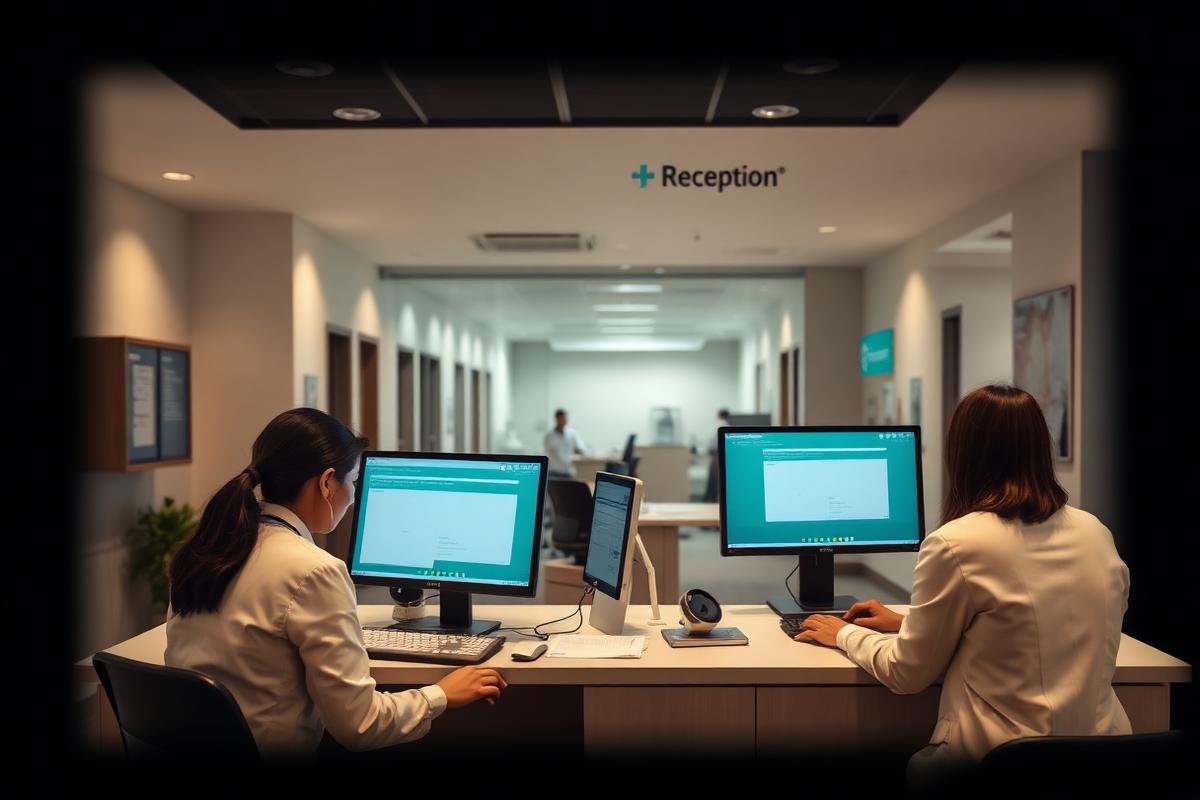
Daily operational workflows
- 1Morning boot-up: front desk verifies overnight patches applied cleanly, EHR responds under two seconds per screen, insurance eligibility checks return, and the check-in kiosk or tablet is online before the first patient walks in.
- 2Clinical documentation: providers move room-to-room with laptops, tablets, or Dragon Medical dictation. Every workstation must resume from lock in under three seconds and print prescriptions to the correct network printer without prompt.
- 3Imaging capture: modalities (X-ray, ultrasound, DEXA, dermatology imaging) push DICOM to PACS on an isolated VLAN, tagged to the correct patient encounter, and appear in the provider's chart within seconds.
- 4End-of-day: encounters are closed, superbills flow to billing, secure messages to patients are queued through the patient portal, and encrypted off-site backups verify successfully before the last provider leaves.
Business & technology challenges
EHR performance regressions
Slow chart loads after an EHR update usually trace back to database, network, or endpoint issues the vendor won't own. We diagnose across the whole stack.
Solo IT contractors leaving
The person who set up your VPN five years ago moved out of state and took the passwords with them. We take over undocumented environments regularly.
Aging on-prem servers
The old Dell tower in the storage closet is out of warranty and still holds the imaging cache. We plan the migration to cloud or hyperconverged replacement without downtime.
Insecure remote access
Providers RDPing from home over a forwarded port is common and dangerous. We replace it with SSO-fronted, MFA-enforced access that HIPAA officers can defend.
Compliance considerations
HIPAA Security Rule
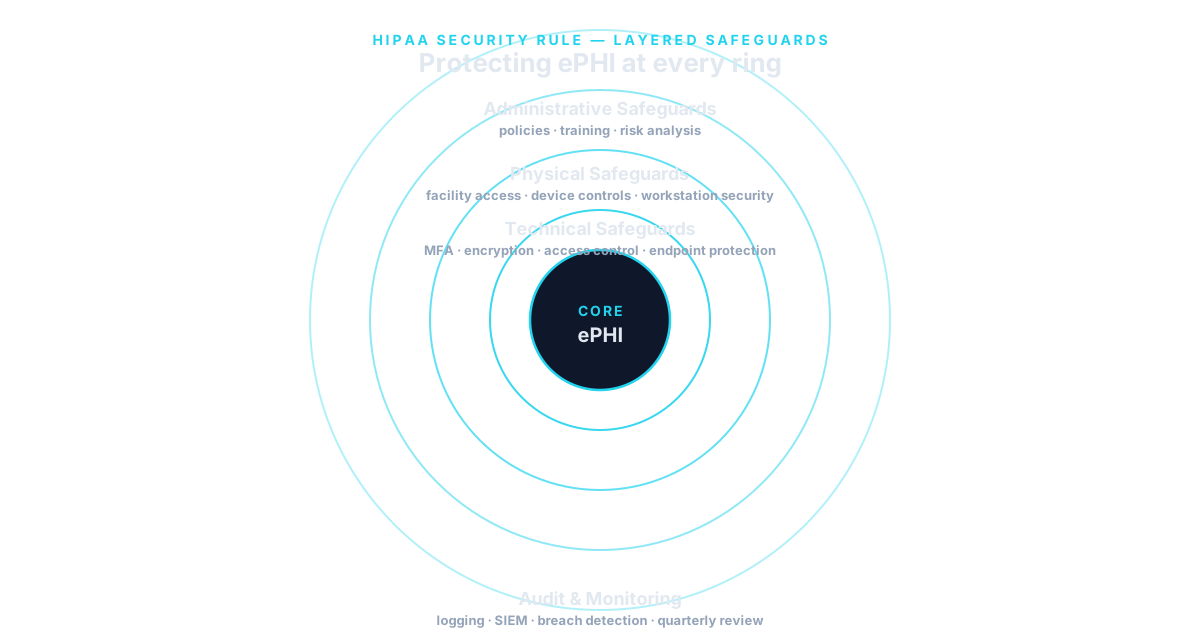
Administrative, physical, and technical safeguards mapped to your environment — access control, audit logs, integrity, transmission security, encryption at rest and in transit.
HIPAA Privacy Rule support
Technical controls that enable your privacy officer's policies: minimum-necessary access, break-glass workflows, disclosure logging.
Business Associate Agreements
We execute a BAA before we touch ePHI and hold BAAs with every downstream vendor (M365, backup, RMM) that could encounter it.
Breach-notification readiness
Immutable logs, ransomware-resistant backups, and a documented incident response runbook so a 60-day HHS clock is manageable, not a scramble.
Industry software we support
Epic / athenahealth / eClinicalWorks / NextGen / Kareo
EHR uptime tuning, workstation optimization, and vendor liaison for network-related tickets.
Dragon Medical One
Microphone provisioning, profile roaming, and endpoint sizing so dictation never lags.
DICOM / PACS
Modality VLANs, DICOM routing, storage sizing, and long-term archival planning.
Microsoft 365 for Healthcare
HIPAA-configured tenants, encrypted email, Teams for internal clinical chat, Purview retention.
Patient portals & telehealth
Bandwidth planning, camera/mic provisioning, and identity federation for provider single sign-on.
Cybersecurity risks unique to this industry
Ransomware targeting EHR databases
Healthcare is the top-targeted vertical for ransomware. We deploy EDR + managed threat hunting and keep immutable, air-gapped backups of the EHR.
Phishing of front-desk credentials
Front-office staff receive fake insurance and billing emails constantly. We combine mail filtering with quarterly HIPAA-flavored security awareness training.
Unpatched medical devices
Imaging modalities often run out-of-support Windows. We isolate them on dedicated VLANs with tight ACLs so they cannot be entry points.
Insider disclosure risk
Curiosity-driven chart access ('celebrity' or family lookups) is a HIPAA violation. We enable EHR audit logging and configure alerts for anomalous access patterns.
HIPAA-aligned defense in depth
Technology recommendations
Segment clinical from guest and IoT
Guest Wi-Fi, patient devices, thermostats, and door controllers do not belong on the same VLAN as EHR workstations.
Standardize the exam-room endpoint
One hardware SKU, one image, one login flow. Faster deploys, faster support, and every room feels the same to providers.
Move backup off-site and off-domain
Local NAS is not backup. Encrypted, immutable, cross-region cloud copies with tested restores are.
Enforce phishing-resistant MFA
Push MFA is being bypassed in the wild. Number matching or FIDO2 keys for anyone with EHR admin rights.
Business continuity & disaster recovery
Downtime procedures
Printed paper encounter forms, offline eligibility workflows, and a documented cutover plan so the practice keeps seeing patients when the EHR is unreachable.
RPO / RTO targets
For most practices we design toward a 1-hour RPO and 4-hour RTO on the EHR — tighter for urgent care and imaging.
Ransomware playbook
Isolate, notify, engage counsel and cyber-insurance, restore from immutable backup, document for HHS. Rehearsed, not improvised.
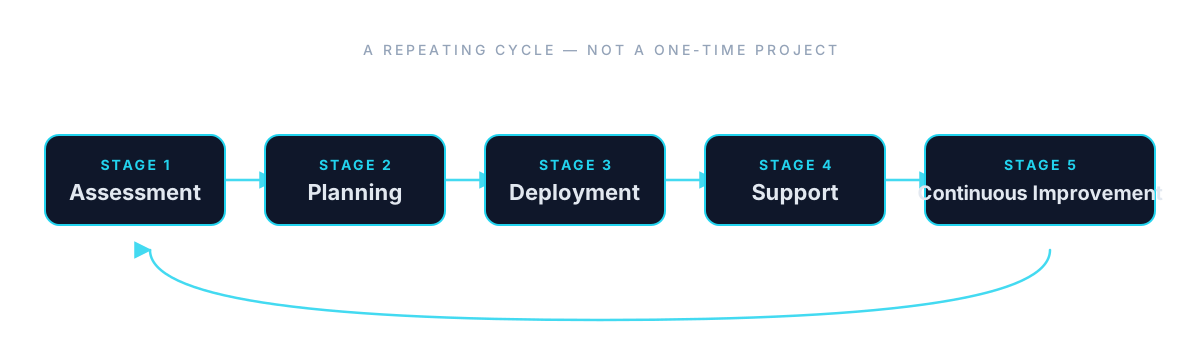
How the engagement runs
Cloud, remote work & AI opportunities
Cloud-hosted EHR migrations
Athena, eCW, Kareo and others offer hosted models that eliminate the on-prem server. We handle the migration and clean up the legacy footprint.
Microsoft 365 for clinical communication
Teams channels for care coordination, encrypted email for outside providers, and Purview to retain records for the state-required minimum.
AI scribes & ambient documentation
Nuance DAX, Abridge, and others are landing in exam rooms. We plan the audio, network, and identity work before rollout, not after.
Remote and hybrid providers
Secure home offices for tele-visit providers with VDI or MFA-gated SSO, headsets, and dedicated bandwidth.
How we support Healthcare & Medical Practices
Compliance & Security Frameworks
HIPAA-focused technical audits with remediation you can actually implement.
ExploreData Backup & Disaster Recovery
Immutable, ransomware-resistant backups of the EHR and imaging.
ExploreCybersecurity Services
Managed EDR, phishing defense, and 24/7 SOC coverage for clinical environments.
ExploreManaged IT Services
Day-to-day operations under a written SLA — the practice never runs without IT.
ExploreMicrosoft 365 Services
HIPAA-aligned M365 tenant configuration, encrypted mail, and Teams governance.
ExploreNetwork Infrastructure
VLAN segmentation between clinical, imaging, guest, and IoT.
ExploreFrequently asked questions
Do you sign a Business Associate Agreement (BAA)?
Yes. A signed BAA is in place before we touch any environment that stores or processes ePHI, and we hold BAAs with the downstream vendors in our stack.
Can you support our specific EHR?
We support the network, endpoint, identity, and integration layer for every major EHR — Epic, athenahealth, eClinicalWorks, NextGen, Kareo, Practice Fusion and others. For EHR application configuration we coordinate directly with your vendor.
What happens if our clinic gets ransomware?
You call our 24/7 line, we isolate the environment, engage your cyber-insurance carrier, and restore from immutable backup on a documented timeline. We rehearse this scenario with clients annually.
Do you work with practices outside Las Vegas?
Our on-site footprint is Las Vegas, Henderson, Summerlin, Enterprise, North Las Vegas, and Boulder City. Remote-supported clients extend across Nevada.
Related industries
Ready for IT that keeps your practice open?
Book a HIPAA-focused technology assessment. We'll walk your environment, document what's in place, and hand back a prioritized remediation plan.