
IT Asset Management (ITAM)
Know What You Own, What It Costs, and When to Replace It
IT Asset Management is the difference between an IT operation that runs the fleet and one that is chased by it. Inoconn builds and operates ITAM programs for Las Vegas, Henderson, and Summerlin businesses — from procurement and imaging through refresh planning and secure disposal — with the reporting that turns the fleet from an expense into a managed portfolio.
Detailed Service Overview
IT Asset Management (ITAM) is the operational discipline of tracking every hardware and software asset the business owns, uses, or leases through its full lifecycle: procurement, receipt, deployment, moves and reassignments, warranty and support coverage, refresh, and secure disposal. Done well, ITAM answers questions that most SMBs struggle with — how many laptops do we have, where are they, who has them, when do their warranties expire, what software is installed on each, and what does our next 24 months of refresh look like — with data that reconciles to reality rather than to a spreadsheet from three quarters ago.
Modern ITAM overlaps with, but is distinct from, Software Asset Management (SAM) and Configuration Management Database (CMDB) concepts. SAM focuses specifically on software entitlements, deployment counts, and license true-up risk. A CMDB extends further, cataloging relationships between assets, services, and business functions — a discipline ITIL formalized and that even at SMB scale pays back the effort of maintaining it. Inoconn implements the level of formality that matches the organization's scale: a small firm may need a well-maintained asset register and a simple license tracker; a 250-person operation may benefit from a lightweight CMDB with service mapping.
Coverage typically includes user endpoints (laptops, desktops, tablets), mobile devices under corporate management, servers and networking gear, peripherals worth tracking (monitors, docks, printers), software licenses (Microsoft 365, Adobe, line-of-business, specialized vertical tools), warranty and support entitlements, and consumables where centralized purchasing produces meaningful savings. Every asset carries an identifier (asset tag, serial, or both), an assignment, a location, a warranty status, and a lifecycle state — and every state change is a tracked event.
Inoconn operates ITAM as an integrated program with RMM, MDM, and procurement. The RMM provides live hardware and software inventory that reconciles to the asset register nightly; MDM adds mobile and modern-managed endpoints; procurement feeds new-asset events at receipt; ticketing captures moves, reassignments, and offboarding. The result is a source of truth that survives staff turnover — a common failure mode for spreadsheet-only inventories that are 'accurate' as long as the person who owns them is still at the company.
Beyond the register, the program produces the reporting that changes decisions: monthly asset counts and coverage, quarterly refresh forecasts with cost, annual software true-up positions, and event-driven reports (offboarding checklist status, warranty expiration alerts, orphaned licenses). This is what turns IT assets from an unmanaged expense into a portfolio leadership can plan around.
Inoconn Commitment
Every service we deliver is backed by our satisfaction guarantee and decades of combined IT expertise.
How it looks
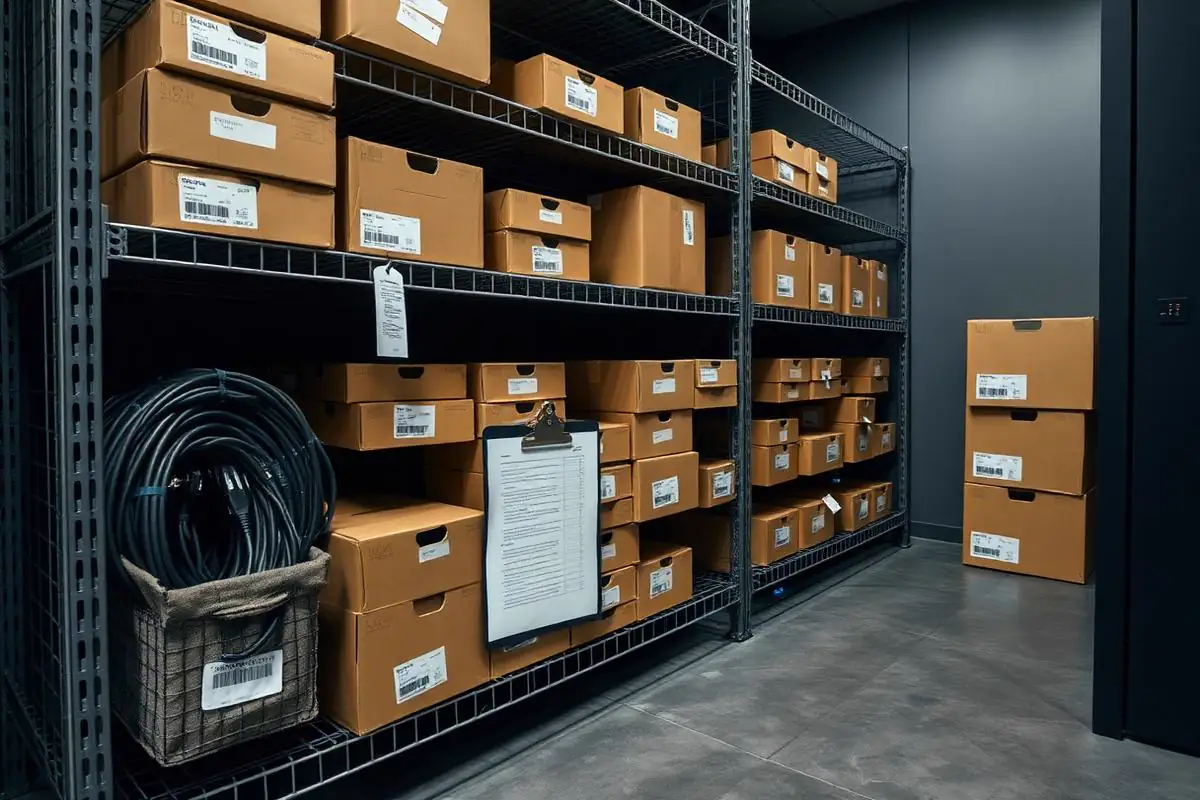
Hardware you can actually account for
Tagged, imaged, and documented devices make onboarding, refresh planning, and secure disposal predictable instead of frantic.
Critical Insight
Why Unmanaged Assets Quietly Cost More Than People Realize
Why This Service Matters
Unmanaged fleets leak in every direction. Laptops walk out during offboarding and never come back because nobody had a current assignment list. Software licenses get paid for by three departments simultaneously because nobody consolidated procurement. Aging machines survive years past useful life, producing an outsized share of support tickets while being nominally 'cheap' because no capital was spent on replacement. Warranties lapse silently and a $600 repair replaces a $200 warranty claim. None of these are dramatic — they are quiet, continuous, cumulative — and together they represent a meaningful percentage of the IT budget of most SMBs.
The audit and compliance side matters too. Every framework — SOC 2, HIPAA, PCI, CMMC, ISO — expects a documented asset inventory as a baseline artifact. Insurance underwriters ask for it. Enterprise customers request it during security reviews. It's foundational to almost every downstream control: you can't harden endpoints you don't know about, you can't refresh what isn't tracked, and you can't decommission what isn't logged. The compliance value is bundled with the operational value at no additional cost.
Finally, ITAM changes the leadership conversation about IT. Without it, capital requests are anecdotal and reactive: 'we need to replace some laptops.' With it, the same request becomes a 24-month refresh plan with cost, warranty exposure, and prioritization — the kind of artifact that gets funded because it's obviously prudent rather than obviously political.
Where This Fits
Environments Where Asset Management Applies
IT asset management brings structure to organizations whose device inventory, licensing, and lifecycle planning have grown beyond a spreadsheet.
Professional offices
Firms tracking laptops, monitors, licenses, and vendor renewals across users.
Multi-location businesses
Organizations that need consistent inventory and refresh cycles across sites.
Medical and dental practices
Practices with clinical and administrative devices on different lifecycles.
Internal IT departments
Teams needing a documented source of truth for hardware, software, and warranty status.
Nonprofits
Organizations balancing donated, purchased, and grant-funded equipment.
Problems → Solutions
Challenges We Eliminate
No Current Inventory
The last known inventory lives in a spreadsheet someone made 18 months ago; nobody can vouch for its accuracy today.
Asset Register With Live Reconciliation
Central asset register (in the RMM/PSA or a dedicated ITAM tool) reconciled nightly against RMM discovery, MDM enrollment, and receiving records — one source of truth per asset.
Offboarding Loses Hardware
Employees leave and their laptop never comes back; there is no defined process to recover, wipe, and reissue.
Asset Tagging and Identification
Every asset receives an asset tag at receipt (durable label, barcode, or QR) tied to serial number and initial assignment. Tags travel with the asset for its entire life.
License Spend Is Untracked
Multiple departments buy overlapping SaaS; nobody has a consolidated view of total software spend or overlapping subscriptions.
Standard Hardware Profiles and Imaging
A small number of standard hardware SKUs with defined images (Windows Autopilot or macOS ADE / Jamf enrollment). New-hire setup takes minutes instead of hours.
Warranties Silently Expire
Machines fail out of warranty because coverage lapsed and nobody was watching the renewal date.
Procurement Coordination
Vendor consolidation, negotiated pricing where volume justifies, and a defined intake process so every new device enters the asset register at receipt rather than at first use.
Refresh Is Reactive
Replacements happen when a machine finally dies, not on a plan — producing lumpy capital demand and productivity loss.
Warranty and Support Tracking
Warranty and support entitlements captured per asset with renewal alerts 60/30/15 days out — surface renewals before they lapse.
New-Hire Setup Is Slow and Inconsistent
Every new employee gets a slightly different setup because there is no standard image, standard app list, or standard hardware profile.
Software Inventory and License Reconciliation
Installed-software inventory from RMM reconciled against license entitlements from procurement records. Overlapping subscriptions, unused seats, and true-up risk surfaced monthly.
Disposal Has No Documented Chain of Custody
Old machines get 'given to a friend' or piled in a closet, with no wipe evidence and no disposal certificate — a compliance and data-security exposure.
Refresh Planning and Reporting
24-month rolling refresh forecast by department, cost projection, and prioritization by age, warranty, and business criticality — leadership-ready capital planning.
No Data for Capital Planning
The next-year budget conversation happens with anecdotes rather than a defensible refresh forecast.
Offboarding Workflow With Recovery Evidence
Ticket-driven offboarding process: retrieve device, wipe (with attestation), disable accounts, revoke licenses, and reassign or retire — with documented completion.
Engagement Model
How an Asset Management Engagement Runs
Asset management engagements start by normalizing what the organization already owns and end with a routine that keeps the picture accurate.
Inventory normalization
Reconciliation of existing records, purchase history, and physical inventory into a single source of truth.
License and warranty review
Alignment of software licenses and warranty coverage to actual deployed devices and users.
Lifecycle planning
Written approach to refresh cycles, standard configurations, and replacement budgeting.
Implementation
Deployment of the tracking approach and labeling / tagging where the organization has chosen to use it.
Onboarding and offboarding routines
Documented routines for issuing devices to new hires and recovering them from departures.
Ongoing review
Periodic reconciliation and review of upcoming end-of-life items and refresh candidates.
What's Included
Central Asset Register
Single source of truth for hardware, software, and license data — reconciled against operational systems rather than maintained by hand.
Hardware Lifecycle Tracking
From procurement through disposal, every asset carries a documented state and a history of events.
Software Inventory and Deployment Reporting
Installed-software counts per device and per user, reconciled to entitlement records — the input for license management and security hardening.
License and Subscription Management
License entitlements, seat counts, renewal dates, and true-up positions tracked per publisher and per contract.
Warranty and Support Coverage
Vendor warranty data ingested and monitored, with proactive alerts on upcoming expirations.
Procurement Standards and Consolidation
Standard SKUs, vetted vendors, and defined intake process replace ad-hoc buying.
Standard Imaging and Zero-Touch Deployment
Windows Autopilot and Apple ADE / Jamf enrollment for consistent, minutes-to-productive new-hire setup.
Offboarding Workflow
Ticket-driven, evidence-producing offboarding that closes the loop on device recovery, wipe, and license reclamation.
Secure Disposal and Chain of Custody
NIST 800-88-aligned data destruction with certificate of destruction and signed chain-of-custody per asset — the compliance-defensible endpoint.
CMDB Concepts Where Justified
Optional relationship mapping — assets → services → business functions — for organizations where service-oriented ITSM produces material value.
Outcomes That Matter
Benefits & Results
Recovered Hardware and Licenses
Structured offboarding recovers hardware, revokes licenses, and reclaims seats — often paying for the program in year one at organizations that were quietly leaking both.
Key Advantage
Predictable Capital Planning
The 24-month refresh forecast turns IT capital from a debate into a scheduled line item.
Faster, More Consistent Onboarding
Standard images and zero-touch enrollment let new employees be productive on day one, every time.
Lower Support Cost per Endpoint
Standardized fleets are cheaper to support: fewer configurations, fewer edge cases, faster resolution, cleaner patching.
Audit-Ready Documentation
The asset register, disposal certificates, and warranty logs satisfy compliance sampling out of the box.
Risks Addressed and Operational Outcomes
What Asset Management Is Designed To Change
Asset management engagements are designed to bring accuracy and routine to a picture that usually grows fragmented over time.
Risks addressed
- Inventory records that no longer reflect the physical fleet
- Software licenses that no longer match deployed devices
- Warranty and end-of-life dates tracked informally or not at all
- Onboarding and offboarding routines that vary by manager
Operational outcomes
- A normalized inventory that leadership can trust
- A license and warranty view aligned with the actual environment
- Documented lifecycle expectations and refresh candidates
- Consistent onboarding and offboarding routines across the organization
Representative Situations
Situations Asset Management Commonly Addresses
These are representative situations, not case studies.
Representative situation
An operations director may realize the current inventory record — often a shared spreadsheet — no longer reflects reality after several years of turnover and hardware refreshes.
A normalized inventory and documented lifecycle routine become the near-term deliverable.
Representative situation
An internal IT lead may need a defensible view of software licensing and warranty coverage before a renewal cycle.
A license and warranty reconciliation paired with a lightweight ongoing routine becomes the focus.
Who This Service Is For
Whether you're a homeowner, small business, or enterprise — we tailor our approach to your specific needs.
Growing Organizations
Companies whose headcount and endpoint count have outgrown spreadsheet-based tracking.
Multi-Location Businesses
Organizations with assets across offices, remote workers, and field staff where physical inventory is impractical.
Regulated Industries
Healthcare, legal, financial, and defense-contracting firms with framework-driven asset inventory obligations.
Businesses Preparing for Sale or Audit
Companies where a defensible asset register is required for due diligence or an upcoming audit.
Organizations After a Loss Event
Companies that just discovered material asset or license leakage during offboarding or true-up and want to stop the bleeding.
Is This the Right Fit
When Asset Management Is the Right Starting Point
Asset management brings structure to hardware, software, and lifecycle records.
This is a good fit when
You need a defensible view of hardware, licensing, and lifecycle
The current picture is spread across spreadsheets, invoices, and individual knowledge.
A different service may fit better
Consider Managed IT
If asset management should live inside a broader operating model with support and monitoring.
Managed IT
Technology & Tools
We leverage industry-leading platforms and enterprise-grade equipment to deliver reliable, future-proof solutions.
Primary source of live hardware and installed-software inventory, feeding the asset register.
MDM/UEM layer providing modern-managed device data and zero-touch enrollment (Autopilot / ADE).
ServiceNow ITAM, Snipe-IT (open source), Asset Panda, or Freshservice Asset Management — selected by scale and existing ITSM ecosystem.
Dell TechDirect, Lenovo Warranty Lookup, HP APIs, Apple GSX/AppleCare — automated warranty data ingestion.
Microsoft 365 admin center, Adobe Admin Console, Zluri / Torii for SaaS discovery, and publisher portals for line-of-business software.
NAID AAA-certified partners for on-site or off-site data destruction with signed certificates.
Service Tiers & Options
ITAM Assessment and Baseline
Fixed-fee engagement to discover the current state, produce a baseline register, and deliver a program design and roadmap.
Managed ITAM Program
Ongoing operations of the ITAM program — register maintenance, reporting, and lifecycle events — as part of a managed IT engagement or standalone.
Refresh Planning Engagement
Focused work to produce a 24-month refresh plan with cost projection, SKU standardization, and procurement strategy — often ahead of an annual budget cycle.
License / SaaS Rationalization
Focused engagement to inventory SaaS and license spend, consolidate overlaps, and rightsize seat counts against actual usage.
Secure Disposal Project
One-time engagement to properly retire an accumulated pile of legacy hardware with documented data destruction and chain of custody.
Frequently Asked Questions
Get answers to the most common questions about this service. Can't find what you're looking for? Contact us directly.
Working With Inoconn
How We Build Trust With Business Clients
Business engagements depend on documented process, clear communication, and honest scope. These are the operational habits we bring to every commercial relationship.
Documented processes
Onboarding, change, and support routines are written down and shared with the customer, not carried in one person's head.
Clear communication
Scope, change windows, and escalation paths are agreed with the customer before work begins and revisited on a defined cadence.
Scope discipline
What is in scope, what is out of scope, and how additions are handled are documented up front to avoid quiet drift.
Technical documentation
Environments, credentials, and vendor relationships are documented in structured records the customer can review.
Vendor coordination
We work directly with the customer's line-of-business vendors, carriers, and platforms rather than routing them back through the customer.
Lifecycle planning
Hardware, licensing, and platform end-of-life dates are tracked so refresh conversations happen early rather than under pressure.
Getting Started
Preparing for an Engagement
Practical guidance for leadership evaluating whether this service is the right next step.
Preparing for an assessment
- Any existing inventory record — spreadsheets, invoices, or system exports
- The primary reason for the engagement (renewal cycle, audit, staff turnover)
- The stakeholders responsible for onboarding, offboarding, and procurement
Information to gather
- Current software licensing arrangements and vendors of record
- Warranty coverage and end-of-life dates where known
- Standard configurations, if any, currently used for new hires
Ready for IT Asset Management (ITAM)?
Don't let technology problems slow you down. Contact Inoconn today to discuss your goals and see how our team can deliver the results you need — reliable, expert IT support you can build a business on.
No obligation. Honest, expert IT support.
Buyer Journey
Where This Fits in a Broader IT Program
Business technology decisions rarely stand alone. These are the services most commonly discussed alongside this one and why they show up together.