
Business Continuity Planning (BCP)
A Plan Your Team Can Actually Execute at 2 a.m., Not a Binder Nobody Reads
Business continuity is the discipline of keeping the organization running through disruption — technical, human, physical, or supply-chain. Inoconn builds BCP programs for Las Vegas, Henderson, and Summerlin businesses that are documented, tested, and owned — with clear separation from disaster recovery and incident response so the right playbook fires at the right moment.
Detailed Service Overview
Business Continuity Planning (BCP) is the enterprise discipline that answers a simple question: when something goes wrong, how does the business keep serving customers, keep paying people, and keep making decisions until normal operations resume? It is a management program, not a technology deliverable — although technology is one of the resources it plans for. A useful BCP has three things: a written plan tied to real business processes, a set of documented recovery procedures the responsible people have rehearsed, and a governance cadence that keeps both from going stale.
The BCP field uses precise vocabulary and it matters. Business Continuity is about keeping the business functioning during and after disruption. Disaster Recovery (DR) is a subset focused specifically on restoring IT systems and data. Incident Response (IR) is the tactical discipline of detecting, containing, and eradicating a specific event (typically a cyber incident). Crisis Communications is how the organization talks to employees, customers, regulators, and the public during a disruption. All four are related, all four are different, and confusing them is one of the most common failure modes in SMB continuity programs. We use each term deliberately and build handoffs between them.
The BCP work centers on a Business Impact Analysis (BIA): a structured inventory of every critical business function (order intake, payroll, patient scheduling, delivery dispatch), what each depends on (people, applications, data, facilities, vendors), how long the business can tolerate its absence (recovery time objective), and how much data loss is tolerable when it comes back (recovery point objective). The BIA drives everything else — investment priorities, DR design, tabletop scenarios, and the order in which functions are restored during an actual event.
Inoconn builds BCP programs for organizations from 15 to 500 employees across Las Vegas, Henderson, and Summerlin — with particular experience in healthcare, professional services, and manufacturing where operational disruption has direct patient, client, or supply-chain consequences. We deliver the artifacts (BIA, BCP, DR runbook, IR plan, communication templates), we run the tabletop exercises that turn documents into muscle memory, and we schedule the annual reviews that keep the program current as the business changes.
A note on scope: BCP is a program, not a one-time project. The first engagement produces the initial documents and a validated first tabletop. The value compounds in year two and beyond as the organization internalizes the discipline, updates the plan against real changes (new office, new ERP, new vendor), and closes findings from each successive exercise.
Inoconn Commitment
Every service we deliver is backed by our satisfaction guarantee and decades of combined IT expertise.
How it looks
A plan the team can actually execute
Roles, communication paths, and system priorities are agreed on ahead of time — not improvised during a disruption.

Critical Insight
Why Untested Plans Fail on Contact With Reality
Why This Service Matters
The organizations that fail catastrophically during disruption almost never fail from lack of a plan — they fail because the plan was written once, filed, and never rehearsed. When the actual event arrives, the primary decision-makers are on vacation, the vendor phone tree has changed, the person who understood the recovery script left the company nine months ago, and the plan assumes access to the very system that is down. This is the normal state of an untested BCP, and it is why tabletop exercises are the single most valuable BCP activity a business can invest in.
The customer and regulatory context has hardened as well. Enterprise customers now include continuity clauses in master service agreements — some require documented BCP artifacts as a condition of contract. Healthcare and DoD customers require it explicitly. Cyber-insurance underwriters ask about BCP, IR, and communication plans on renewal applications, and price accordingly. Doing nothing is increasingly a competitive and regulatory liability.
Finally, BCP produces a strategic byproduct: it forces leadership to name the critical few business functions, quantify what they depend on, and rank them. That conversation — often for the first time in the organization's history — clarifies priorities and reveals fragile single points of failure that were previously invisible. Many clients tell us the BIA changed how they invested in IT and vendor relationships even before any disruption tested the plan.
Where continuity is a promise
Businesses that clients expect to still be there
Legal, financial, and healthcare offices carry ongoing commitments — the point of continuity planning is that a bad Tuesday doesn't become a broken commitment on Wednesday.

Where This Fits
Environments Where Continuity Planning Applies
Continuity planning applies to organizations that have identified critical systems and want a written approach to keeping them operating through disruption.
Professional offices
Firms with client-facing deadlines that cannot slip during an outage.
Medical and dental practices
Practices where clinical workflows must continue during hardware or connectivity events.
Multi-location businesses
Companies where one site's disruption should not stop the entire organization.
Nonprofits
Organizations serving communities on schedules that cannot be paused.
Problems → Solutions
Challenges We Eliminate
No Written Plan, or a Plan Nobody Has Read
The organization has 'thought about it' but nothing exists on paper, or a legacy binder from 2019 sits in a drawer nobody has opened since.
Business Impact Analysis (BIA)
Structured inventory of critical business functions with quantified RTO, RPO, dependencies, and financial impact per function.
DR and BCP Confused as the Same Thing
The team has a backup solution and believes that constitutes continuity — no BIA, no communications plan, no manual workaround defined.
Continuity Risk Assessment
Assessment of realistic threat scenarios — cyber incident, extended power or connectivity outage, facility loss, key-person loss, vendor failure, regional weather — with likelihood and impact scored.
No Tabletop Exercises Ever Run
The plan has never been rehearsed with the actual people responsible for executing it; nobody knows the vendor phone tree, decision authority, or first-hour actions.
Written Business Continuity Plan
Plan documenting activation criteria, roles (with named owners and backups), decision authority, communication trees, and workaround procedures per critical function.
Vendor Continuity Not Considered
Critical vendors (payroll, EHR, hosted ERP, ISP, generator provider) have no continuity information on file and no defined workaround if they go down.
Disaster Recovery Runbook
The technical subset: restore order, dependency map, RTO/RPO by system, credentials access (through a secure break-glass process), and validation checklist. Distinct from the BCP and cross-referenced.
Supply-Chain and Single-Source Risk
Key inputs come from a single vendor, single carrier, or single facility with no documented alternative.
Incident Response Plan Alignment
Coordination between BCP activation and cyber-incident response so both fire correctly during a ransomware or breach scenario — with clear roles and handoffs.
Contractual or Regulatory BCP Requirement
A new customer, regulator, or auditor is asking for BCP documentation and there is nothing to hand over.
Crisis Communications Templates
Pre-drafted internal, customer, vendor, regulator, and (if applicable) media communications with approval workflow and named spokespersons.
Post-Incident Attention
The organization just lived through a real event (ransomware, prolonged outage, facility disruption) and needs a real program before the next one.
Tabletop Exercises
Facilitated exercises that walk the response team through realistic scenarios, surface gaps, and produce a findings list with owner and due date on each item.
Engagement Model
How a Continuity Engagement Runs
Continuity planning starts with what leadership cannot afford to lose and produces a written plan the organization can rehearse.
Impact review
Structured conversation with leadership about critical systems, acceptable downtime, and dependencies.
Environment assessment
Inventory of the systems, data, and vendors that support the critical workflows.
Continuity design
Written plan covering backup, alternate access, communication, and role responsibilities during disruption.
Implementation
Deployment of the technology and documentation the plan depends on.
Testing
Rehearsal of key elements of the plan so leadership can see it work under controlled conditions.
Ongoing review
Periodic re-review as systems, staff, and business priorities change.
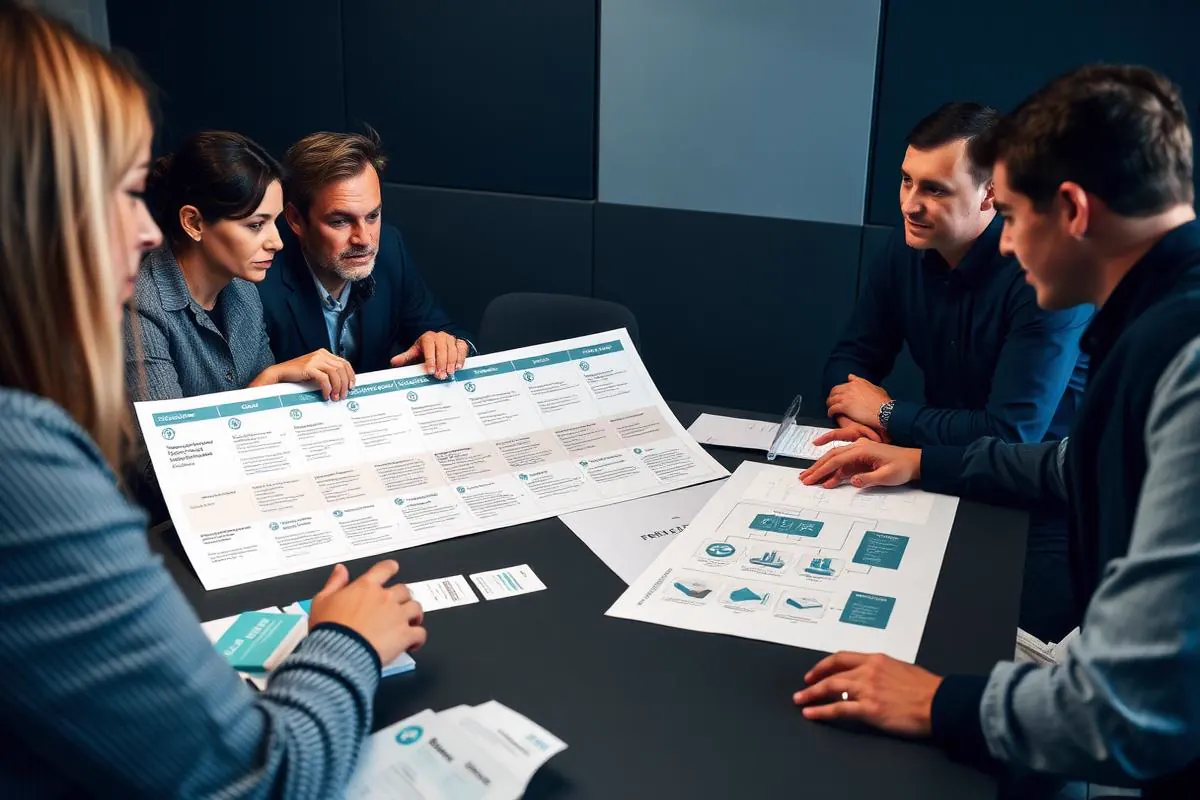
The rehearsal
Tabletop exercises before the real event
Walking a scenario through the team — who calls whom, who has authority to decide, what happens if a key person is unreachable — is how a written plan becomes a real one.
The physical layer
Redundancy, quietly in place
Second circuits, backup power, and failover routes exist for the day they are needed — the goal is a switchover that customers and employees never noticed happened.

What's Included
Formal BIA Methodology
Structured interviews, standardized RTO/RPO capture, dependency mapping, and financial impact quantification aligned to recognized frameworks.
Clear BCP / DR / IR Separation
Three documents, three purposes, defined handoffs. No conflation, no gaps.
Scenario Library for Tabletops
Curated realistic scenarios (ransomware, prolonged connectivity loss, facility inaccessibility, key vendor failure, key-person loss, insider misuse) with facilitator notes and injects.
Communications Playbook
Templates for employees, customers, vendors, regulators, and media (where applicable), with named spokespersons and approval flow.
Vendor Continuity Register
Tiered vendor inventory with continuity evidence, alternate contacts, and defined workarounds per tier-1 dependency.
Break-Glass Access Design
Documented, audited emergency access to critical systems and credentials so the plan works when normal authentication paths are down.
Executive-Facing Reporting
Program status, exercise findings, and remediation progress reported quarterly to leadership in language that supports funding and prioritization decisions.
Framework Alignment
Program design mapped to NIST SP 800-34 and ISO 22301 elements, useful for SOC 2, HIPAA, and enterprise-customer due diligence.
Outcomes That Matter
Benefits & Results
Response That Actually Works Under Stress
Rehearsed roles and decisions turn an event from chaos into a checklist — measurably faster containment and shorter downtime.
Key Advantage
Defensible Position With Customers and Regulators
Documented BCP artifacts satisfy MSA continuity clauses, insurance underwriting, and audit sampling in one motion.
Fewer Surprises From Vendors
The vendor continuity program surfaces missing SOC 2 reports, weak vendor DR, and single-source risks before they become an incident.
Clear Priorities Across the Organization
The BIA gives leadership a defensible ranking of what to restore first, funded proportionally rather than politically.
A Program That Improves Every Year
Each tabletop produces findings, remediation, and a stronger plan — compounding value that a one-time consulting engagement can't match.
The proof
Operations that keep going through the weather
Storms, outages, and the days that force other businesses to close: the value of a plan is that the team knows what to do, and the answer is usually to keep working.

Risks Addressed and Operational Outcomes
What Continuity Planning Is Designed To Change
Continuity planning is designed to make critical operations survivable during disruption, not to prevent disruption itself.
Risks addressed
- No written answer to 'how do we operate if the office is inaccessible?'
- Critical systems concentrated on a single site or vendor
- Communication approaches that assume normal channels are available
- Plans that exist on paper but have never been rehearsed
Operational outcomes
- A written plan tied to the systems leadership has identified as critical
- Alternate access approaches for the workflows that cannot pause
- A communication model that works during disruption
- Rehearsal results documented for leadership and stakeholders
Representative Situations
Situations Continuity Planning Commonly Addresses
These are representative situations, not case studies.
Representative situation
A leadership team may want a written answer to what happens if the primary office is inaccessible for a business day.
A continuity plan with roles, alternate access, and communication expectations becomes the deliverable.
Representative situation
An operations director may need to demonstrate to a client, insurer, or grantor that a documented plan exists and has been rehearsed.
A written plan with evidence of testing becomes the near-term focus.
Who This Service Is For
Whether you're a homeowner, small business, or enterprise — we tailor our approach to your specific needs.
Healthcare and Life Sciences
Practices, clinics, and small health systems with patient-care continuity obligations and HIPAA contingency-planning requirements.
Professional Services Firms
Legal, accounting, financial services, and consulting firms with client SLA and confidentiality obligations.
Manufacturing and Distribution
Operations with supply-chain, production, and dispatch dependencies that cannot tolerate multi-day disruption.
SaaS and Technology Companies
Organizations whose customers include continuity requirements in MSAs and whose sales cycle requires BCP artifacts at security review.
Government Contractors
Firms with contractual continuity requirements from federal, state, or municipal customers.
Leadership decisions
The playbook the leadership team owns
Continuity is a leadership document, not an IT document — decisions about which systems come back first are made by the people accountable for the business, in advance.

Is This the Right Fit
When Continuity Planning Is the Right Starting Point
Continuity planning is broader than backup. It applies when leadership needs a written approach to keeping the business operating through disruption.
This is a good fit when
You need a written plan for critical workflows
Alternate access, communication, and role responsibilities during disruption need to be documented and rehearsed.
A different service may fit better
Consider Backup & Disaster Recovery
If the primary need is data protection and recovery rather than a full operational plan.
Backup & Disaster RecoveryConsider IT Consulting
If leadership first needs to define which workflows are truly critical before a plan is built.
IT Consulting
Technology & Tools
We leverage industry-leading platforms and enterprise-grade equipment to deliver reliable, future-proof solutions.
IT Glue, Hudu, or a structured document library where the plan, runbook, and vendor register live with version history and access control.
Datto, Veeam, Rubrik — the DR foundation, with tested restore evidence.
Mass-notification and secure messaging (Everbridge, RingCentral, Signal for out-of-band) used during activation.
Air-gapped vault or sealed-envelope process for emergency credentials, audited on use.
Structured scenario decks, inject timing, and findings-capture templates used during exercises.
UpGuard, Whistic, or spreadsheet-backed vendor register for tier-1 continuity tracking.
Service Tiers & Options
BCP Program Build (Initial Engagement)
Full initial program: BIA, threat assessment, plan authoring, first tabletop, and findings remediation. Typical 8-14 week engagement.
Tabletop Exercise (Standalone)
Facilitated exercise for organizations with an existing plan that has never been rehearsed, or that need a specific scenario stress-tested.
Annual Program Operations
Ongoing plan governance: annual review, scheduled tabletops, vendor register updates, and findings tracking.
Rapid Response BCP for a Contract or Audit
Compressed engagement to produce credible BCP artifacts in advance of a specific customer, regulatory, or audit deadline.
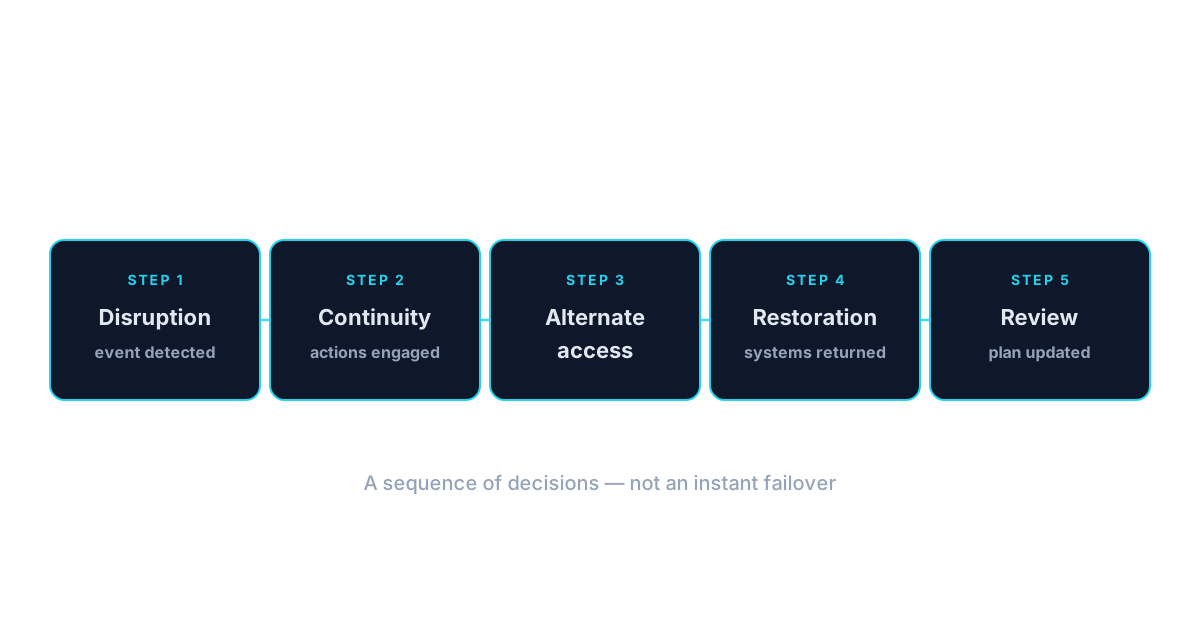
A continuity sequence, not a single switch
Frequently Asked Questions
Get answers to the most common questions about this service. Can't find what you're looking for? Contact us directly.
Working With Inoconn
How We Build Trust With Business Clients
Business engagements depend on documented process, clear communication, and honest scope. These are the operational habits we bring to every commercial relationship.
Documented processes
Onboarding, change, and support routines are written down and shared with the customer, not carried in one person's head.
Clear communication
Scope, change windows, and escalation paths are agreed with the customer before work begins and revisited on a defined cadence.
Scope discipline
What is in scope, what is out of scope, and how additions are handled are documented up front to avoid quiet drift.
Technical documentation
Environments, credentials, and vendor relationships are documented in structured records the customer can review.
Vendor coordination
We work directly with the customer's line-of-business vendors, carriers, and platforms rather than routing them back through the customer.
Lifecycle planning
Hardware, licensing, and platform end-of-life dates are tracked so refresh conversations happen early rather than under pressure.
Getting Started
Preparing for an Engagement
Practical guidance for leadership evaluating whether this service is the right next step.
Preparing for an assessment
- The workflows leadership considers critical to daily operations
- Any prior continuity or backup plans, however informal
- Recent disruptions that influence how leadership views the risk
Information to gather
- The systems and data supporting each critical workflow
- Current backup and offsite arrangements
- Communication channels and role responsibilities during disruption
Typical engagement stages
Weeks 1–2
Impact review with leadership and environment assessment.
Weeks 3–4
Written continuity design covering critical workflows.
Weeks 5–6
Implementation of the supporting technology and documentation.
Week 7+
Rehearsal of the plan with documented results for leadership.
Ready for Business Continuity Planning (BCP)?
Don't let technology problems slow you down. Contact Inoconn today to discuss your goals and see how our team can deliver the results you need — reliable, expert IT support you can build a business on.
No obligation. Honest, expert IT support.
Buyer Journey
Where This Fits in a Broader IT Program
Business technology decisions rarely stand alone. These are the services most commonly discussed alongside this one and why they show up together.