
Structured Cabling & Low-Voltage Infrastructure
The Physical Layer That Every Other System Silently Depends On
Structured cabling is the one part of your network you can't upgrade with a firmware push. Inoconn designs, installs, certifies, and documents low-voltage infrastructure for Las Vegas, Henderson, and Summerlin offices, warehouses, medical suites, and retail — with the same crew designing the plan, pulling the cable, and testing every port.
Detailed Service Overview
Structured cabling is the physical foundation of the network — the copper and fiber running behind the walls, the patch panels in the rack, the labeled outlets at every desk, and the cable pathways connecting the MDF to every IDF. Unlike switches or Wi-Fi controllers, cabling is not something you patch on a Tuesday: what gets pulled during a build-out determines network capability, cost, and reliability for the next 10-15 years. Getting it right at construction is dramatically cheaper than remediating it later.
Inoconn provides structured cabling for offices, medical suites, retail spaces, warehouses, and light-industrial facilities across Las Vegas, Henderson, Summerlin, and North Las Vegas. Every project follows industry standards — TIA/EIA-568, TIA-569 for pathways, TIA-606 for administration and labeling, TIA-607 for grounding — with certified test results delivered on every run. The same crew that designs the plan pulls the cable, terminates it, and hands over documentation, which eliminates the finger-pointing that occurs when design, installation, and test are done by three different companies.
Standard scope includes Cat6 or Cat6A copper (the current 10-year decision for horizontal cabling), OM4 multimode and OS2 singlemode fiber for backbone and inter-building runs, MDF and IDF cabinet build-outs with proper power, cooling, and grounding, rack and patch panel design that supports growth without re-terminating, cable management that keeps future changes possible, and full labeling at both ends of every run. We also handle camera cabling (typically Cat6 with PoE budget planning), access-control cabling (proprietary cabling per manufacturer plus IP head-end), and wireless AP cabling — all under one project with one accountable crew.
The design work matters as much as the install. A proper cabling design starts with the floor plan, the workflow, and the growth plan — not with a hardware list. It considers the correct number of drops per workstation (four is a defensible default in modern offices), the AP placement to actually cover the space rather than to match architectural symmetry, the pathway strategy that will accept additional runs later without opening walls, the cabinet elevation that leaves room for the next switch stack, and the labeling scheme that will make sense to whoever is troubleshooting a stuck jack in 2032. We deliver this design before any hardware is ordered and before any cable is pulled.
The engagement model is turnkey by default — design, materials, install, test, document — but we routinely partner with GCs, low-voltage sub-agreements, and in-house facilities teams on the sub-elements that fit the client's project. Every job ends with a documentation package: as-built drawings, port maps, test results per run, and a warranty registration where the manufacturer's extended warranty program applies (typically 25-year performance warranties from Panduit, CommScope, or Leviton on registered installations).
Inoconn Commitment
Every service we deliver is backed by our satisfaction guarantee and decades of combined IT expertise.
How it looks
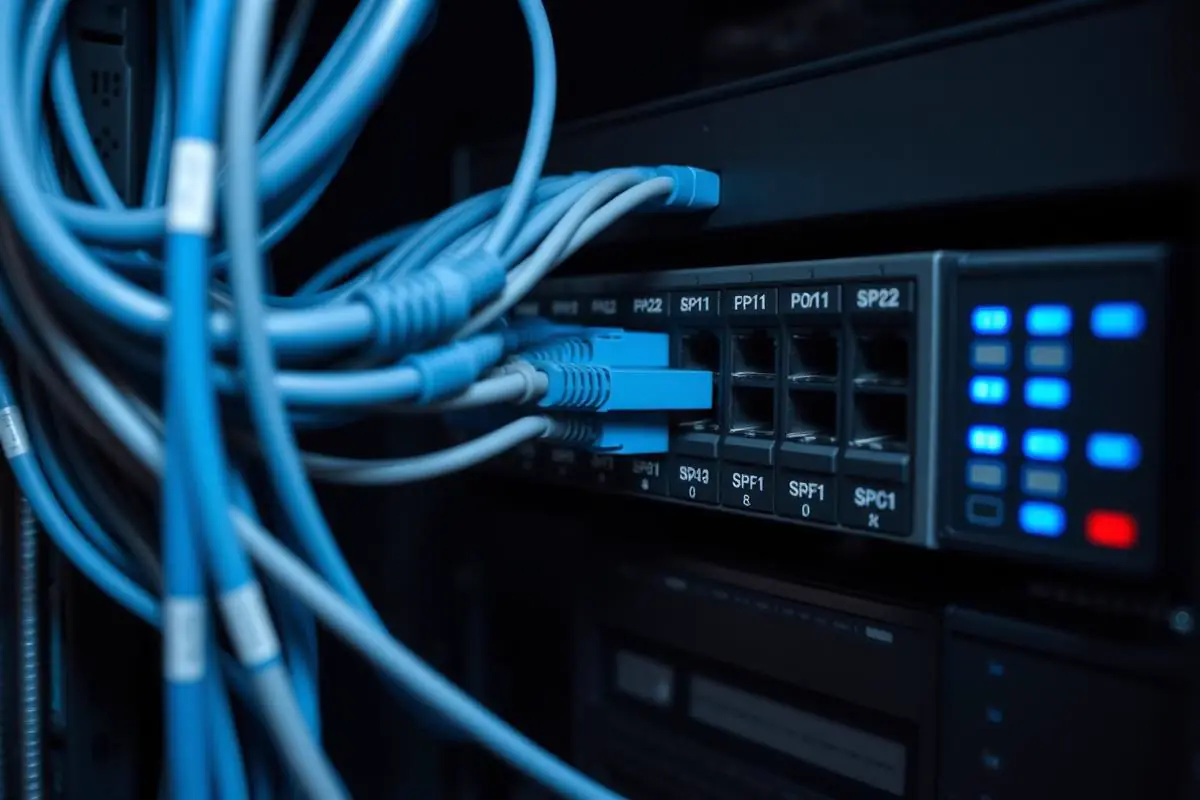
Cabling that supports the network above it
Labeled, tested, and documented cabling makes every future change — a move, a new workstation, a phone — a much smaller job.
Critical Insight
Why the Physical Layer Decides the Ceiling for Everything Above It
Why This Service Matters
You can buy the best switches, firewalls, and Wi-Fi 7 APs on the market and still ship a slow, unreliable, expensive-to-operate network — because bad cabling caps the entire stack. Untested runs fail intermittently. Undersized pathways force compromises on the next expansion. Missing labels turn every troubleshooting call into a scavenger hunt. Under-specified copper (Cat5e in 2026) forecloses on 10GBASE-T at the desk, which forecloses on the next generation of Wi-Fi backhaul, which forecloses on features the business will genuinely want inside the useful life of the installation.
The economics of doing it right at construction are compelling. Adding a fourth drop at each workstation during rough-in costs a fraction of a per-drop trip charge later. Running conduit or a proper cable tray during construction costs a fraction of pulling ceiling tiles two years in. Certifying the runs during install (Fluke DSX or equivalent, with per-port results) costs almost nothing on top of the pull and produces the warranty registration and the documentation everyone will want when a problem surfaces. Skipping certification saves nothing and creates a decade of latent risk.
Finally, the physical layer is the layer that produces the most avoidable emergencies. Intermittent connectivity, PoE dropouts at cameras and APs, mystery latency on a single VLAN — a huge fraction of these calls trace back to cabling that was never certified, terminations that were done in a hurry, or pathway crowding that damaged jackets over time. A proper install eliminates a whole class of problems the operations team otherwise spends years chasing.
Where This Fits
Spaces Where Structured Cabling Applies
Structured cabling work is scoped to the specific space, floor plan, and business needs the cabling has to serve.
New office build-outs
Tenant improvements where cabling has to be planned before ceilings and walls close.
Office relocations
Moves where the new space needs data, voice, and wireless coverage from day one.
Retail locations
Storefronts needing dependable back-office and point-of-sale cabling.
Medical and dental practices
Clinical spaces where operatory and imaging device placement drives cabling design.
Warehouse and light industrial spaces
Environments with longer distances, higher ceilings, and mobile-device coverage needs.
Problems → Solutions
Challenges We Eliminate
New Build-Out With No Cabling Design Yet
The GC is asking for a low-voltage plan and the tenant has no design — a decision-making moment where mistakes get baked in for a decade.
Site Survey and Cabling Design
Walk-through, floor-plan markup, drop-count analysis, AP and camera placement planning, MDF/IDF location, pathway strategy, and cabinet elevation — delivered as a signed design before any hardware is ordered.
Existing Cabling Is Undocumented
Nobody knows which cable runs where, jacks are unlabeled, the patch panel is a bird's nest, and every change requires trial-and-error tracing.
Category Selection Guidance
Straight recommendation on Cat6 vs Cat6A based on horizontal length, PoE budget, expected refresh cycle, and future application requirements — with the trade-offs stated in writing.
Cat5e Hitting Its Limit
Legacy Cat5e can't support current PoE budgets, 2.5G/5G/10G speeds, or the density modern APs and cameras expect.
Backbone Fiber Design
OM4 multimode for in-building backbone and OS2 singlemode for longer runs and inter-building links, with proper strand count and connector strategy (LC in most cases; MPO where lane density justifies it).
MDF / IDF In Poor Condition
Cabinets are overheating, ungrounded, or crammed into unsuitable spaces — creating heat, safety, and reliability problems.
MDF and IDF Build-Out
Proper cabinet or wall-mount rack with adequate power (2N where feasible), cooling, grounding to TIA-607, ladder rack or cable tray entry, and space for growth.
AP Placement Was Guesswork
APs mounted symmetrically to match ceiling tile, not based on a heat map or design — producing coverage holes and interference.
Structured Termination and Cable Management
Patch panels with correct pinout (T568B is the shop standard unless the client specifies otherwise), horizontal cable managers, vertical management on both sides of the rack, and dressing that leaves room for future changes.
Camera or Access-Control Project Stalled on Cabling
The security integrator is waiting on cable runs that were never part of the original scope, and the tenant needs both crews coordinated.
Certified Testing per Run
Fluke DSX-8000 or DSX-5000 certification per run, results delivered as a PDF and archived. Failures re-terminated and re-tested before hand-off.
Post-Move Chaos
The organization moved into a space where the cabling was 'existing to remain,' which turns out to mean 'unlabeled, uncertified, and partially failed.'
TIA-606 Labeling and Documentation
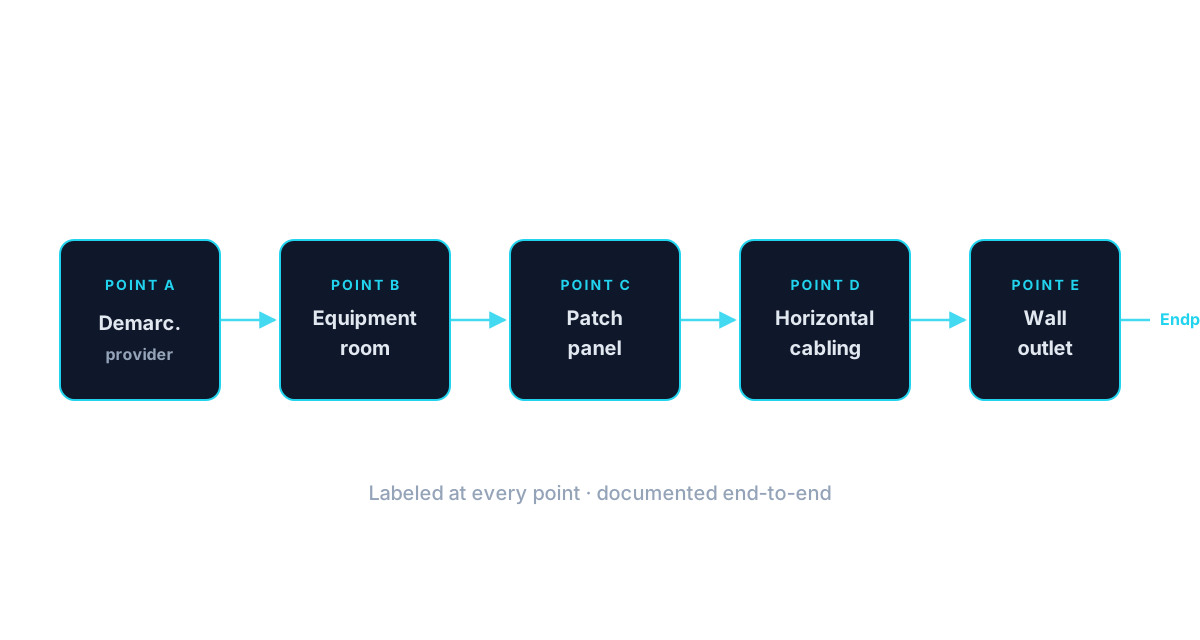
Consistent labeling scheme on both ends of every run, port map, as-built drawings, and cabinet elevation drawings — the artifacts that make the install operable for the next 15 years.
Engagement Model
How a Cabling Project Runs
Cabling work is a physical project. Planning, sequencing, and coordination with other trades matter as much as the cable itself.
Site review
Walk-through of the space with the floor plan to understand drop locations, pathways, and equipment placement.
Installation planning
Written plan covering cable type, drop counts, pathways, IDF/MDF placement, and coordination with electrical and construction trades.
Rough-in
Installation of pathways and cable runs before ceilings, walls, and finishes are closed.
Termination and labeling
Termination at both ends, labeling to a documented scheme, and organization inside the rack.
Testing and certification
Structured testing of installed runs with results delivered as part of project closeout.
Documentation
As-built diagrams, drop map, and rack elevations delivered to the customer at close.
What's Included
Cat6 and Cat6A Copper
Channel-certified Cat6 for standard horizontal runs and Cat6A for high-density AP backhaul, camera runs with high PoE budgets, and any horizontal application planning for 10G at the desk.
OM4 and OS2 Fiber
OM4 multimode for in-building backbone and OS2 singlemode where distance or future 10G/25G/100G plans require it, terminated with LC or MPO as appropriate.
MDF and IDF Design
Cabinet layout, elevation drawings, power and cooling planning, TIA-607 grounding, and pathway design so cables enter cleanly and leave room for growth.
Patch Panel and Rack Design
24- or 48-port angled or flat patch panels, structured horizontal management, and cabinet-level dressing that supports moves-adds-changes without cascading rework.
TIA-606 Labeling
Consistent labels on both ends of every run, patch panel port assignments, and cabinet mapping — the artifact that makes the install maintainable.
Fluke DSX Certification
Per-run certification with archived test results — required for manufacturer performance warranty and non-negotiable for a professional install.
Camera and Access-Control Cabling
PoE budget planning, cable category selection for HD/4K cameras, pathway sharing where code allows, and coordinated cabling for IP access-control head-ends.
Wireless Infrastructure Cabling
AP placement based on a designed heat map, Cat6A drops where the AP or future AP requires multi-gig backhaul, and proper mounting kit selection.
Expansion Planning
Pathways sized for future runs, cabinet space held for future switches, and spare capacity in patch panels — so the next expansion is a pull, not a re-do.
Outcomes That Matter
Benefits & Results
Higher Reliability, Fewer Mystery Failures
Certified runs eliminate a whole category of latent, intermittent failures that plague uncertified installations.
Key Advantage
Documentation That Makes Ops Cheaper
Labeled jacks, port maps, and as-built drawings turn every future move-add-change from an investigation into a lookup.
10-15 Year Useful Life
Correct category and design choices support the next two or three generations of switches and APs without re-cabling.
Cleaner Coordination on Every Future Project
Camera, access-control, AV, and network vendors all work faster in a well-cabled space with a clear cabinet.
Warranty Coverage
Manufacturer-registered installs carry 25-year performance warranties — the vendor is on the hook if the physical layer fails within that window.
Risks Addressed and Operational Outcomes
What Structured Cabling Is Designed To Change
Cabling work is designed to make the physical layer supportable for the life of the space.
Risks addressed
- Runs pulled after ceilings close, forcing surface-mounted fixes
- Undocumented drop locations that make troubleshooting slow
- Non-standard termination and labeling that compounds over time
- Rack layouts that outgrow the space before the next refresh
Operational outcomes
- A documented drop plan tied to the floor plan
- Consistent termination and labeling to a documented scheme
- A rack layout that leaves room for near-term growth
- As-built documentation delivered at project close
From demarcation to the endpoint
Representative Situations
Situations Cabling Work Commonly Addresses
These are representative situations, not case studies.
Representative situation
A business preparing a new office build-out may need cabling planned and installed before ceilings and finishes close.
A written cabling plan coordinated with construction and electrical schedules becomes the near-term focus.
Representative situation
A retail or clinical operator may be relocating to a new space that has no usable existing cabling.
A drop plan, IDF/MDF placement, and installation schedule tied to opening dates becomes the deliverable.
Who This Service Is For
Whether you're a homeowner, small business, or enterprise — we tailor our approach to your specific needs.
New Office Build-Outs and Tenant Improvements
Design and install for a shell space or a full TI where cabling decisions must land during construction.
Office Relocations
New-space cabling scoped and installed on the move schedule, with documented cutover of the network.
Medical, Dental, and Legal Suites
Environments with equipment (imaging, EHR workstations, VoIP handsets, access control) that require higher-density and higher-reliability cabling.
Retail and Hospitality
POS, guest Wi-Fi, cameras, and back-of-house workstations coordinated as one project with proper pathway planning.
Warehouses and Light Industrial
Long runs, mixed indoor/outdoor pathways, and fiber backbone to remote endpoints on the operations floor.
Multi-Tenant Buildings
Riser cabling, floor IDFs, and cross-tenant coordination in office towers and mixed-use buildings.
Technology & Tools
We leverage industry-leading platforms and enterprise-grade equipment to deliver reliable, future-proof solutions.
Primary channel-certified end-to-end systems used for warranted installations.
Copper and fiber horizontal and backbone cable used in projects where the client requests specific manufacturer standardization.
Cabinet, rack, and enclosure systems selected by environment (data-closet-grade vs. AV-rack vs. wall-mount).
Per-run copper and fiber certification tooling — every run tested, results archived per project.
TIA-568 (cabling), TIA-569 (pathways), TIA-606 (administration and labeling), TIA-607 (grounding and bonding) applied to every project.
Southern Nevada Context
Cabling Projects Across the Las Vegas Valley
Structured cabling is on-site by definition. Projects across the Las Vegas Valley are scheduled around construction and tenant-improvement timelines and coordinated with electrical and general-contractor trades.
Coverage includes Las Vegas, Henderson, North Las Vegas, and Enterprise.
- Las Vegas
- Henderson
- North Las Vegas
- Enterprise
Service Tiers & Options
New Construction / Tenant Improvement Cabling
Full design and install coordinated with the GC schedule for a new space.
Expansion or Add-Move Project
Additional drops, IDF expansion, or new-department cabling in an occupied space.
Cabling Remediation and Documentation
Assessment, testing, remediation of failing runs, cleanup of the cabinet, and full re-documentation of an existing space.
Camera / Access-Control / AV Cabling
Standalone low-voltage projects coordinated with security or AV integrators.
Frequently Asked Questions
Get answers to the most common questions about this service. Can't find what you're looking for? Contact us directly.
Getting Started
Preparing for an Engagement
Practical guidance for leadership evaluating whether this service is the right next step.
Preparing for an assessment
- A floor plan or space diagram, if one exists
- The construction or move-in schedule the cabling has to align with
- The drop locations already identified (desks, printers, phones, wireless, cameras)
Information to gather
- General contractor and electrical trade contact information
- Rack and IDF/MDF location decisions
- Any specialty runs required (POS, cameras, wireless access points)
Typical engagement stages
Week 1
Site walk-through and requirements review.
Week 2
Written cabling plan, drop count, and installation schedule.
Rough-in week
Installation of pathways and cable runs before ceilings close.
Termination week
Termination, labeling, testing, and as-built documentation.
Ready for Structured Cabling & Low-Voltage Infrastructure?
Don't let technology problems slow you down. Contact Inoconn today to discuss your goals and see how our team can deliver the results you need — reliable, expert IT support you can build a business on.
No obligation. Honest, expert IT support.
Buyer Journey
Where This Fits in a Broader IT Program
Business technology decisions rarely stand alone. These are the services most commonly discussed alongside this one and why they show up together.